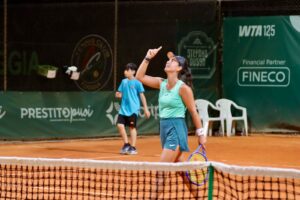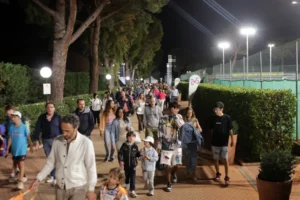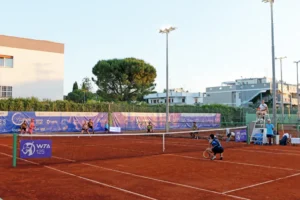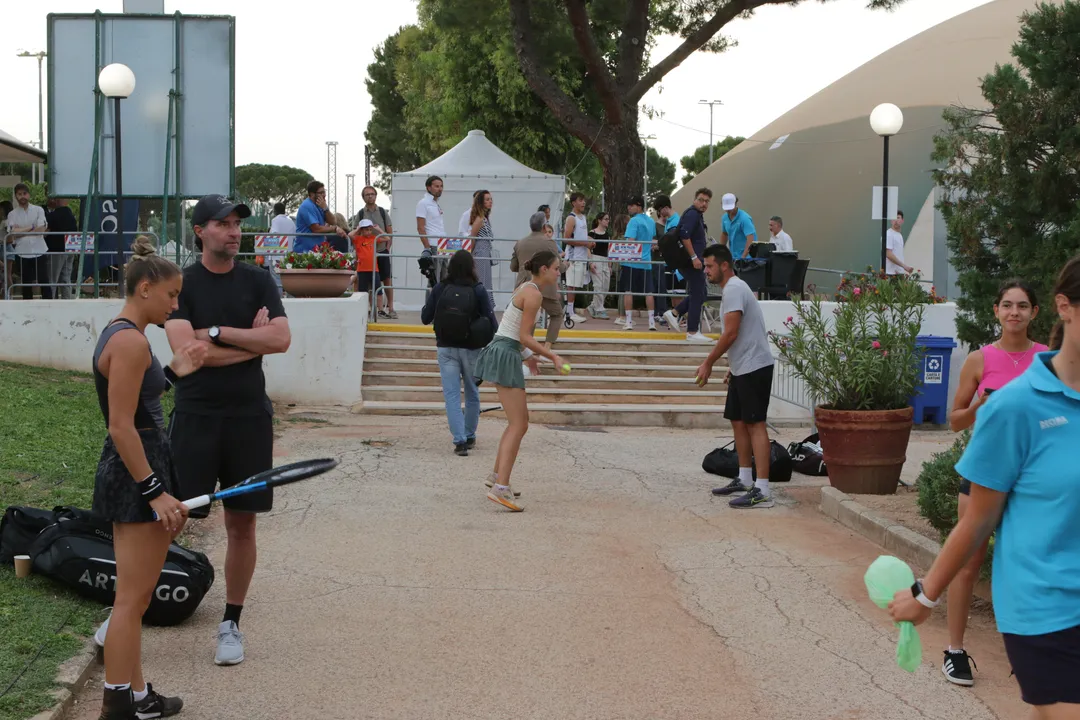

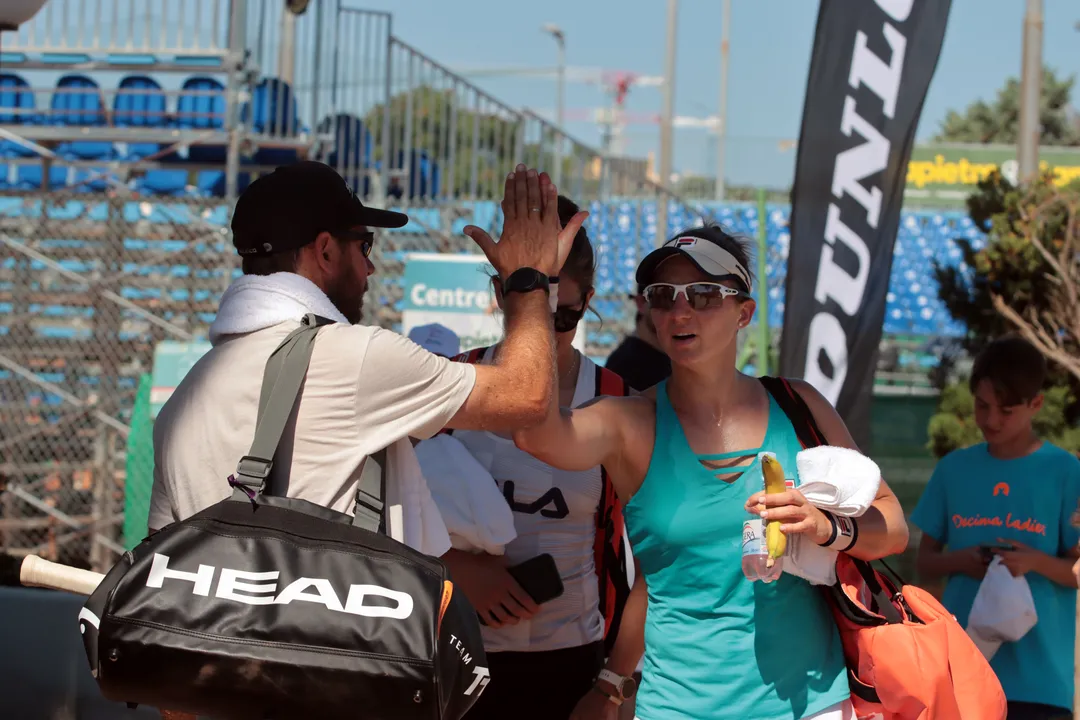
Then there is the work on the venue. Tennis Club Foggia becomes the physical heart of the event: courts, entrances, public areas, technical spaces, restricted zones, routes, sponsor areas, hospitality, media, services and signage must work together in an orderly way. A tournament also lives through its ability to let people move naturally, avoiding confusion and making the experience enjoyable from the very first entrance.The public sees the centre court, the players, the umpires, the ball kids, the score and the stands. But around that court there is a structure made of timing, responsibilities and coordination. Every day requires attention: match times can change, matches can run long, the weather can have an impact, the needs of the players must be respected, the media must be able to work, sponsors must find suitable spaces and the public must receive precise directions. Another central element is communication. Before, during and after the tournament, communication builds the relationship between the event and the public. News, social media, images, interviews, videos, live updates and on-court content make it possible to follow Open delle Puglie even beyond the stands. In a contemporary event, what happens online is not a marginal addition: it is an integral part of the experience.
The hospitality village, promotional areas, spaces dedicated to companies and side activities help transform the tournament into a platform for relationships. The public comes for the tennis, but can enjoy a broader experience: meeting brands, discovering initiatives, taking part in special moments, coming into contact with local organisations and perceiving the tournament as a living week, not simply as a sequence of matches.
Then there is the relationship with Foggia and Puglia. An event such as Open delle Puglie WTA 125 cannot be separated from the territory that hosts it. The city, Capitanata and Gargano are not merely a geographical backdrop. They are part of the event’s value. Every piece of content, every image and every connected activity can help tell the story of a sporting, welcoming and dynamic Puglia, capable of attracting national and international attention.
The organisational work must therefore bring together two dimensions: the sporting one and the territorial one. On one side there are draws, courts, umpires, match times, players, results and technical standards. On the other, there are the public, sponsors, the city, hospitality, communication, institutions and promotion. The success of a tournament is born from the balance between these components.
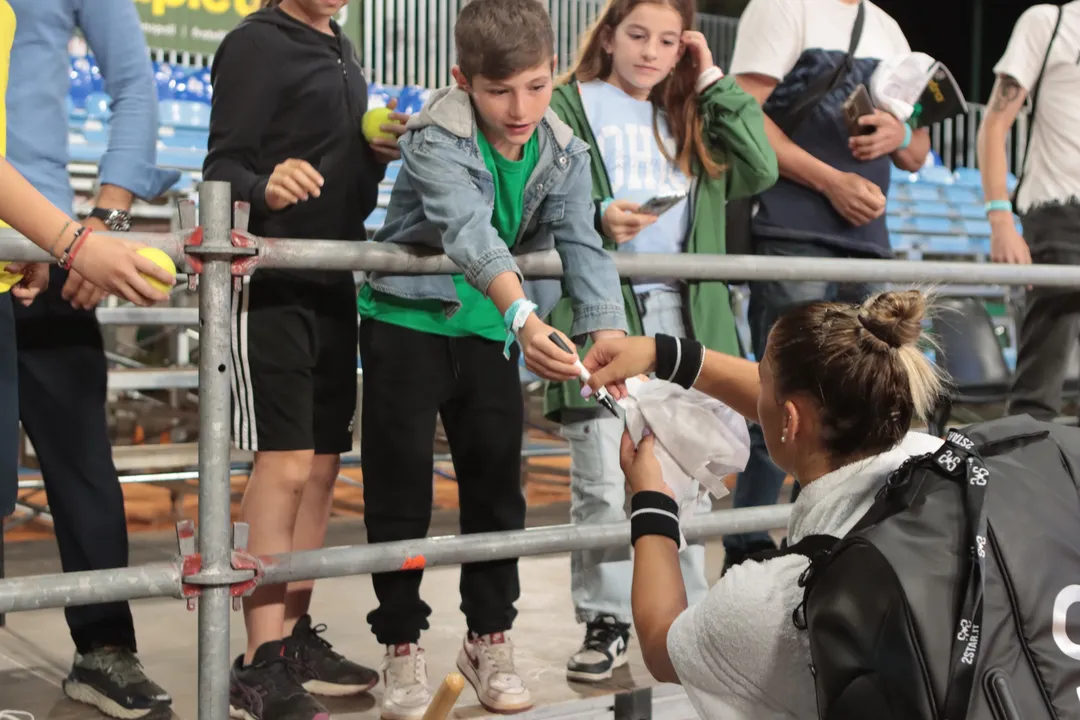
Volunteers, operators and staff also play an essential role. They make concrete what appears on paper as a programme. They welcome, guide, solve problems, support activities, facilitate flows and maintain direct contact with the public. In many cases, they are the first face of the tournament for those entering the club. The quality of the experience also passes through them.
Behind the scenes there is also a technical dimension that the public notices only when something does not work: connections, streaming, audio, video, accreditations, digital materials, website updates, content management, news publication, photographs, clips, press releases and coordination with the official channels. All of this must proceed at a steady pace, especially during tournament week, when information changes quickly.
Red clay adds another level of attention. The courts must be cared for, prepared, maintained and made suitable for match play. Every surface has its own requirements, and red clay requires specific work before, during and after the days of play. This too is part of the backstage: the public sees the beauty of the court, but behind that image there is continuous work.
Open delle Puglie WTA 125 is also a storytelling challenge. Every tournament produces stories: a young player who surprises, a favourite who confirms her level, a hard-fought match, an engaged crowd, a day of great attendance, a symbolic image, an interview, a moment of encounter between sport and the local area. The task of communication is to capture these stories and turn them into content capable of making the tournament live even for those who are not there.
Preparing the Foggia tournament therefore means building a sporting, organisational and narrative machine. It is not enough to arrange the courts and wait for the public. An experience must be designed. Those who arrive must find information, guidance, emotion, quality and recognisability. Sponsors must be given a serious context, media useful materials, players suitable conditions, and the public a week to remember.
Behind the scenes is the place where the event takes shape before becoming a spectacle. It is made of decisions, checks, corrections, tests, phone calls, materials, content, site inspections and details. It is the least visible part, but also the one that allows the tournament to show its strength when the decisive days arrive.