

Red clay is not simply a playing surface. It is a different way of understanding tennis. It changes the rhythm of rallies, alters the bounce of the ball, forces players to build the point with patience and turns every match into a test of technique, clarity, physical endurance and tactical ability.
For this reason, red clay tennis holds a special place in the history of the sport. It is the surface of great duels, long rallies, lateral chases, sudden variations and points won not only with power, but with intelligence and vision of play. Those watching a match on red clay often see something deeper than a simple exchange of shots: they see a game of chess played in motion.
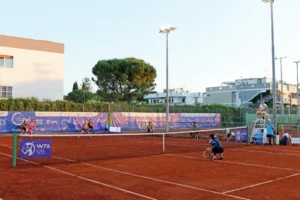
Open delle Puglie WTA 125, scheduled at Tennis Club Foggia from June 1 to 7, 2026, was born precisely within this tradition. Its place in the European red clay season makes the tournament a particularly interesting event for the public, because it offers the chance to watch players up close as they compete on a technical, selective and richly nuanced surface.On hard courts, points can often be quicker. On grass, speed and the serve take on decisive importance. On red clay, however, the match rarely offers shortcuts. The higher bounce, the lower speed of the ball after impact with the court and the possibility of sliding during movement make the game more complex. Every shot must be prepared, every choice must have a purpose, and every tactical mistake can open space for the opponent. That is why red clay is often associated with completeness. A player who is effective on this surface must be able to defend, attack, change pace, use spin, manage depth, read the wind, interpret the bounce and maintain concentration even in the longest rallies. Hitting hard is not enough. You have to build.
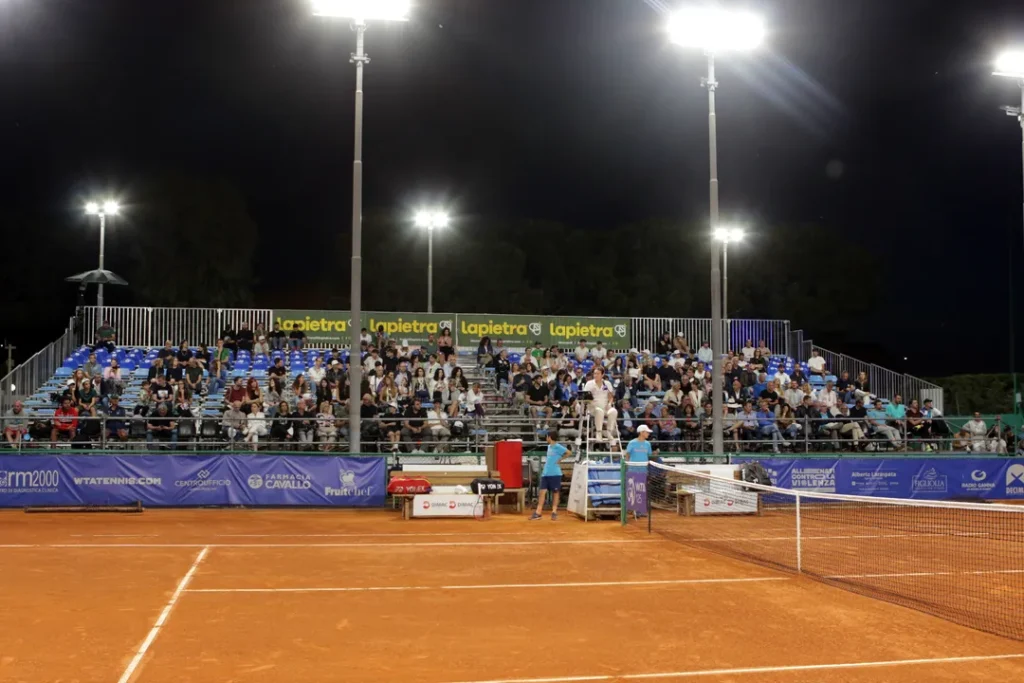
There is also an evident physical aspect. Red clay requires legs, balance, stamina and patience. Rallies can stretch longer, games can become hard-fought, and sets can change direction more than once. A match that seems under control can suddenly open up again, because on this surface the margin between dominance and difficulty is thin. This is also why the crowd experiences the match with greater involvement: every point seems to have a story.
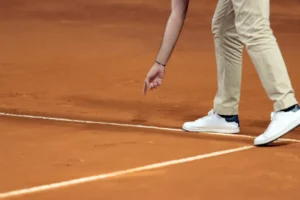
Red clay is also the surface of tennis’s Mediterranean memory. Its colour recalls summer, the sun, the dust rising after a slide, the lines swept at the end of a set, the full sound of the ball bouncing high before impact. In Puglia, this imagery finds a natural connection with the local area: light, court, crowd and sporting landscape blend into a recognisable identity.
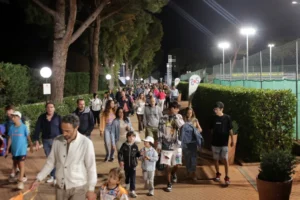
For Foggia and Tennis Club Foggia, hosting a WTA 125 tournament on red clay means entering an international sporting dimension without losing the connection with the territory. The court becomes the centre of a week in which women’s tennis is not only watched, but experienced: from the stands, in the areas dedicated to the public, through news, video content, result updates and the stories of the players.